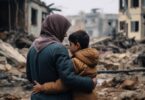
What are the most pressing issues in the world today? What will demand the most attention in the next 5, 10, and 20+ years? In this article, which frequently refers to the World Economic Forum’s 17th Edition of the Global Risks Report, we’ll highlight 20 current global issues we must address, including issues related to climate change, COVID-19, social rights, and more. While it’s hardly a comprehensive discussion, it’s a solid introduction to the kinds of concerns facing our world today.
#1. Poverty
In fall 2022, the World Bank will update the International Poverty Line from $1.90 to $2.15. This means anyone living on less than $2.15 is in “extreme poverty.” Why the change? Increases in the costs of food, clothing, and shelter between 2011-2017 make the “real value of $2.15 in 2017 prices equal to $1.90 in 2011 prices. As for the World Bank’s goal to reduce extreme poverty to 3% or less by 2030, the pandemic has made it even harder. Extreme poverty isn’t the only poverty we have to contend with. 62% of the global population lives on less than $10/day. While there’s been progress over the years, the end of poverty is still far off.
Learn more about tackling poverty with an online course: Poverty & Population: How Demographics Shape Policy (Columbia University)
#2. Climate change
The IPCC released its sixth report in 2022. In its summary for policy-makers, the report’s authors outlined a series of near-term, mid-term, and long-term risks. If global warming reaches 1.5°C in the near term (2021-2040), it would cause “unavoidable increases in multiple climate hazards,” as well as “multiple risks to ecosystems and humans.” In the long term, climate change will present major health issues, premature deaths, risks to cities and settlements, and other dangers. Mitigation is desperately needed – and fast. Because of climate change’s connection to other issues on this list, it’s one of the most serious challenges facing humanity.
Learn more about climate change with an online course: Science and Engineering of Climate Change (EDHEC Business School)
#3. Food insecurity
According to the 2022 Global Report on Food Crises, which is produced by the Global Network against Food Crises, the number of people in crisis or worse is the highest it’s been in the six years since the report has existed. Close to 193 million people were experiencing acute food insecurity in 2021, which is an increase of almost 40 million since 2020. This represents a staggering 80% increase since 2016. Causes include “economic shocks,” like an increase in global food prices. Domestic food price inflation in low-income countries also rose a lot. “Weather-related disasters” are also a big driver. For 15.7 million people in 15 countries, it was the primary driver of acute food insecurity.
Learn more about food insecurity with an online course: Feeding the World (University of Pennsylvania)
#4. Refugee rights
According to UNHCR, the war in Ukraine sparked the fastest-growing refugee crisis since WWII. Almost 6 million (as of May 10, 2022) people have fled. The UNCHR’s Refugee Brief, which compiles the week’s biggest refugee stories, has recently described situations in places like Somalia, where thousands of people were displaced due to severe drought. Between January and mid-April, more than 36,000 refugees from Nigeria, Mali, and Burkina Faso arrived in Niger. These are only a few examples of the refugee crises, which endangers already marginalized groups – like women and children – and puts them at an increased risk of trafficking, violence, and death.
Learn more about refugee rights with an online course: Refugees in the 21st Century (University of London)
#5. COVID-19
The WHO declared COVID-19 a pandemic in March 2022. It will continue to be a major issue for the world. The WEF’s Global Risks Report 2022 discusses COVID’s effects at length, including major economic recovery disparities and social erosion. According to a January 2022 article from NPR, there are also issues with vaccinations as many countries continue to have trouble getting doses. Distribution, vaccine hesitancy, healthcare systems, and other problems also factor into low vaccination rates. While we may never know the exact impact, the WHO estimates that between 1 January 2020 and 31 December 2021, there were around 14.9 million excess deaths linked to COVID-19.
Learn more about the impact of COVID-19 with an online course: Life After COVID-19: Get Ready for our Post-Pandemic Future (Institute for the Future)
#6. Future pandemic preparation and response
COVID-19 taught the world the importance of prepardeness. In a Harvard blog, Dr. Tedros Adhanom Ghebreyesus, director-general of the WHO, outlined the lessons the world should take to heart. The first: science has to guide policy. The politicization of the pandemic led to a lot of unnecessary damage. Another lesson is that science must pair with equity or it can actually make inequalities worse. This is obvious when looking at how low-income countries struggled to get the vaccines while wealthier countries stocked up. More resilient healthcare systems are also a must, as well as more coherent, global plans on how to respond. The world must also invest in research on contagious diseases, zoonotic diseases, the effectiveness of outbreak responses, and more.
Learn more about future pandemic response with an online course: Pandemic preparedness, prevention, and response (Politecnico di Milano)
#7. Healthcare
The healthcare industry has experienced major shifts due to the COVID-19 pandemic. According to the World Economic Forum, there’s been new investments and innovations, especially from the technology and telehealth sectors. In 2021, $44 billion was spent on health innovation. The world will be seeing the effects of these innovations for years to come, though equity will no doubt be a major issue. In places like the United States, the pandemic also reaffirmed how broken healthcare systems can be. In an MIT News blog, Andrea Campbell, a professor of political science, says the pandemic revealed a “dire need” for investments in public-health infrastructure, as well as a need to expand healthcare access and insurance coverage.
Learn more about health inequity issues with an online course: Addressing Racial Health Inequity in Healthcare (University of Michigan)
#8. Mental health
Globally, almost 1 billion people have some form of mental disorder. The pandemic made the world’s mental health worse. According to a scientific brief from the WHO, there’s been a 25% increase in anxiety and depression worldwide. Causes include social isolation, fear of sickness, grief, and financial anxieties. Health workers were also severely impacted, as well as young women and girls. The brief also highlights how the pandemic disrupted many mental health services, including services for substance abuse. Countries need to ensure access to mental health services as part of their COVID-19 recovery plans and beyond. It’s an economic decision, as well. The Lancet states that anxiety and depression alone cost the global economy around $1 trillion a year.
Learn more about mental health with an online course: The Science of Well-Being (Yale University)
#9. Disability rights
According to the WHO, over 1 billion people have some form of disability. Half can’t afford healthcare. They’re also more likely to live in poverty than those without a disability, have poorer health outcomes, and have less access to work and education opportunities. Human Rights Watch lists other discriminations disabled people face, such as an increased risk of violence. There’s been progress regarding disability rights, but many countries lack strong protections. The world still has a long way to go to ensure equality for those with disabilities.
Learn more about disability rights with an online courses: Disability Awareness and Support (University of Pittsburgh)
#10. LGBTQ+ rights
Members of the LGBTQ+ community face discrimination in many forms. According to Amnesty International, discrimination can target sexual orientation, gender identity, gender expression, and sex characteristics. Even in more progressive countries like the United States, people face violence and discrimination. According to the Human Rights Campaign, more than 300 anti-LGBTQ+ bills were proposed in 2022. At least a dozen states are considering legislation that forbids schools from discussing or using a curriculum that covers sexual orientation and gender identity. Considering the United States’ influence in the world, this attack on LGBTQ+ rights will likely have consequences that need to be addressed.
Learn more about LGBTQ+ issues with an online courses.
#11. Reproductive justice
Reproductive justice – which encompasses more than just abortion rights – is threatened by legislation, lack of funding, lack of education, and restricted healthcare access. In most places, wealth is a big determinant of whether a person can access reproductive services. It’s better in some places than others, but as we’ve seen with other issues on this list, even “progressive” countries like the United States are experiencing major shifts. In June 2022, the Supreme Court is expected to overrule Roe v. Wade, a milestone court case that protected a pregnant woman’s right to abortion. The impact would be immediate and will likely influence other countries.
Learn more about reproductive justice and women’s rights: International Women’s Health and Human Rights (Stanford University)
#12. Children’s rights
Children are a very vulnerable group. In 2019, around 5.2 million children under five from mostly preventable and treatable causes. 2.4 million were newborns under 28 days old. Leading causes include preterm birth complications, pneumonia, and malaria. According to UNICEF, the climate crisis also represents a severe threat to kids. Around 1 billion kids live in “extremely high-risk countries” that are hit by the worst effects of climate change. 920 kids have trouble accessing clean water and 600 million are exposed to vector-borne diseases like malaria. Child labor also remains an issue. At the beginning of 2020, around 160 million were forced into labor while COVID-19 put 9 million more kids at risk. That’s almost 1 in 10 children globally. Almost half are in dangerous environments. As is often the case, the other issues on this list – climate change, poverty, COVID, gender equality, etc – factor into children’s rights.
Learn more about children’s rights: Children’s Human Rights – An Interdisciplinary Introduction (University of Geneva)
#13. Gender equality
Global gender equality has gradually improved over the years, but data from the 2021 Global Gender Report shows that the end of the global gender gap is still 135 years away. The pandemic played a huge role in reversing positive trends as women were hit harder financially. According to Oxfam, women experienced a 5% job loss while men experienced 3.9%. That means women lost about $800 million in 2020. This is a low estimate since it doesn’t count the informal economy, which includes millions of women. Women are also more likely to live in poverty, more affected by gender-based violence, and more affected by climate change.
Learn more about gender equality: Gender Analytics: Gender Equity through Inclusive Design (University of Toronto)
#14. Cybersecurity
The WEF’s Global Risks Report 2022 (page 9) listed cybersecurity vulnerabilities as a concern. The reason is rapid digitalization, which was triggered in part by COVID-19. Many “advanced economies” are now at a higher risk for cyberattacks. GRPS respondents identified cybersecurity failure as a critical short-term risk. In 2020, malware and ransomware attacks went up by 358% and 435%. There are a few reasons for this, including better (and easier) attack methods and poor governance. Cyberattacks have a swath of serious consequences and erode public trust. As countries become more dependent on digitalization, their cybersecurity needs to keep up.
Learn more about cybersecurity: IBM Cybersecurity Analyst Professional Certificate (IBM)
#15. Disinformation
Rapid digitalization comes with many issues, including the lightning-fast spread of disinformation. The WEF report describes deepfakes, an accessible AI technology, and its potential to sway elections and other political outcomes. Disinformation doesn’t need to be sophisticated to be successful, however. Through social media posts and videos, twelve anti-vax activists were responsible for almost ⅔ of all anti-vaccine content on platforms like Facebook and Twitter. Their content flooded the internet with the type of harmful, fear-mongering disinformation that played a significant role in vaccine hesitancy and political radicalization. Because disinformation travels faster online than the truth, it’s a global issue that should be addressed.
Learn more about tackling disinformation: Communicating Trustworthy Information in the Digital World (University of Rotterdam)
#16. Freedom of the press
According to the Varieties of Democracy Institute (as reported in The Economist), about 85% of people live in a country where press freedom has gone down in the past 5 years. After peaking at .65 in the early 2000s and 2011, the global average dropped to .49 in 2021. Major countries like China, India, Russia, Brazil, and Turkey saw significant declines. Journalists and news organizations face threats like violence, imprisonment, lack of funding, and coordinated online attacks and harassment. A free press is essential to a functioning democracy. Without press freedom, all human rights are at risk.
Learn more about freedom of expression: Human Rights for Open Societies (Utrecht University)
#17. Debt crises
In the WEF Global Risks Report (page 7), respondents named debt crises as one of the most pressing issues over the next decade, though respondents believe they will become most serious in just 3-5 years. COVID-19 is a big reason why. Government stimulus was necessary, but many countries are now left with debt burdens. For corporate and public finances in large economies, debt burdens can lead to defaults, bankruptcies, insolvency, and more. This is a far-reaching issue as it affects budgets for areas like healthcare and green energy.
Learn more about the debt: Finance for everyone – Debt (McMaster University)
#18. Corruption
Corruption encompasses a host of actions such as bribery, election manipulation, fraud, and state capture. The World Bank Group names corruption as a barrier to ending extreme poverty and “boosting shared prosperity” for the poorest populations. When it comes to addressing poverty, climate change, healthcare, gender equality, and more, corruption gets in the way. Because corruption is a global problem, global solutions are necessary. Reform, better accountability systems, and open processes will all help.
Learn more about tackling corruption: What is Corruption: Anti-Corruption and Compliance (University of Pennsylvania)
#19. Authoritarianism
According to Freedom House, global democracy is eroding. That includes countries with long-established democracies. In their 2022 report, the organization reveals that global freedom has been declining for the past 16 years. 60 countries faced declines in the last year. Only 25 saw improvements. Only 20% of the global population lives in Free countries. China, Russia, and other authoritarian countries have gained more power in the international system, while countries with established democracies – like the United States – are losing their freedoms. What can be done? Freedom House says success “requires a bold, sustained response that establishes support for democracy and countering authoritarianism.” Governments and citizens engage and stand for democracy.
Learn more about tackling authoritarianism: Citizenship and the Rule of Law (University of London)
#20. Global cooperation
Addressing the issues in this article is not an easy task. True progress is only possible through global cooperation, a fact which is woven through the WEF report. Everything from addressing cybersecurity threats to humanitarian emergencies to protecting democracy depends on strong cooperation between countries. As the report says in its preface: “Restoring trust and fostering cooperation within and between countries will be crucial to addressing these challenges and preventing the world from drifting further apart.” The challenges threatening global cooperation are just as clear as the need, however, which makes it one of the most serious issues of the day.
Learn more about global cooperation: Global Diplomacy: the United Nations in the World